
Cat Scratcher for Wall: 5 Modern Designs That Actually Look Good
This post contains affiliate links. If you buy through them we may earn a small commission, at no extra cost to you. Learn more.
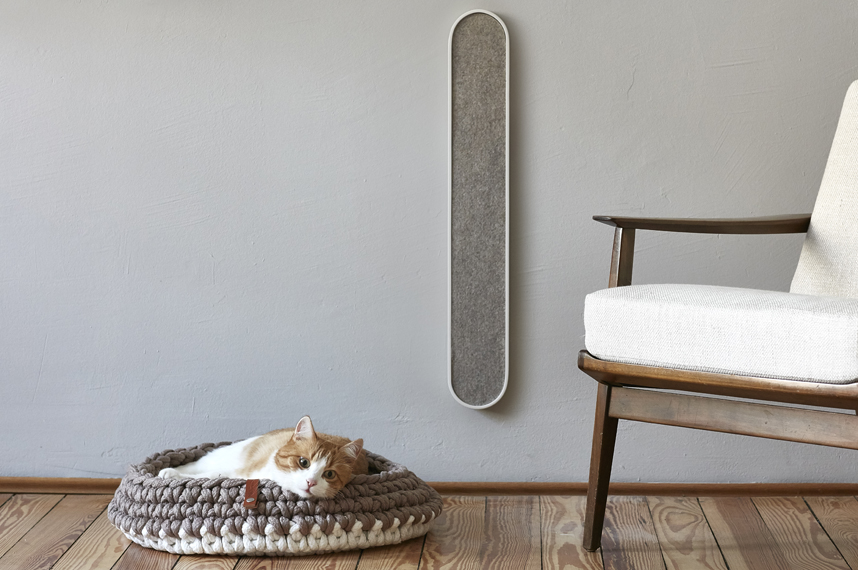
A cat needs to scratch, but nobody wants their home to look like a feline obstacle course (unless that’s your thing, of course; no judgment). That’s where the humble cat wall scratcher shines. It takes up zero floor space, stays put while your cat goes to town on it, and, if you choose well, it can look more like a piece of decor than a pet product.
Below are five modern wall-mounted cat scratchers I’d happily hang in my own living room, from budget cardboard to a splurge-worthy designer board, plus tips on where and how to hang them so your cat actually uses them.
Why a wall scratcher works so well
- It doesn’t wobble. A scratcher that tips over even once can be abandoned for good. Fixed to the wall, it’s rock solid.
- It goes where it matters. Cats scratch to leave a visible, scented mark in spots that matter to them: by the sofa, in the hallway, near the door. A wall scratcher can go right there without eating up floor space. (More on the science in my guide on how to stop your cat from scratching furniture.)
- It gives a full vertical stretch. Mounted at the right height, your cat can reach up and stretch their whole body, which a floor pad can’t offer.
- It’s small-space friendly. Perfect for apartments, narrow hallways and anyone who’s already out of floor space.
The 5 best wall cat scratchers at a glance
| Scratcher | Material | Mounting | Best for |
|---|---|---|---|
| FUKUMARU Wall Scratching Post | Natural sisal | Screws into studs or a solid wall | A tall, sturdy vertical stretch |
| Furhaven Wall-Mounted Scratching Boards (2-pack) | Corrugated cardboard | Adhesive pins | Covering several rooms |
| Furrther Sisal Scratcher Mat | Printed sisal | Adhesives and twist pins | Art lovers, sofa corners |
| Round Cotton Rope Scratch Mat | Woven cotton rope | Built-in hanging loop | Boho and natural interiors |
| Tuft + Paw Tab Scratching Board | Carpet, wood frame | Optional wall mount | The design-obsessed splurge |
1. FUKUMARU Wall Scratching Post: the minimalist classic
Most scratching posts are bulky floor towers. The FUKUMARU wall scratching post takes the same job and flattens it against the wall: a 28-inch vertical post wrapped in natural sisal, the texture most cats love to dig into. Its plain, minimalist look slips into a door frame, a window corner or the spot right beside the sofa without taking up any floor space.
It screws into a stud or a solid wall, so it isn’t the pick for renters who can’t drill, but that’s also what makes it rock solid. The maker says it passed a 20 kg (about 44 lb) static load test, so even a big cat hanging off it at full stretch won’t budge it.
Good to know: Rub a little catnip into the sisal the first few days to get your cat interested.
2. Furhaven Wall-Mounted Scratching Boards: best value for multiple rooms
Scratchers work best when there’s one in every room your cat cares about, and the Furhaven two-pack makes that easy. Each board has an L-shaped design that can lie flat on the floor, rest at an incline, or hang on the wall with the included adhesive pins. The double-walled corrugated cardboard is reversible, so when one side is worn you can flip it for a fresh surface.
The gray and white print is understated, and catnip comes in the box. It also comes in a softer seaglass color and in standard or wide sizes.
Good to know: Use one on the wall by the sofa and one flat on the floor nearby, so your cat gets both a vertical and a horizontal option.
3. Furrther Sisal Scratcher Mat: art for your wall (and your cat)
If you think sisal is too rustic for your space, this one will change your mind. The Furrther sisal scratcher mat comes printed with artsy, playful designs, so it reads as a piece of wall art rather than a cat accessory. It’s made of natural sisal fibers with a shedding-resistant finish, which means less fluff on the floor than a typical sisal mat.
It’s flexible, too: stick it on the wall, wrap it around a sofa corner your cat has already claimed, or lay it on the floor. Adhesives, pads and twist pins are all included.
Good to know: Put it directly on (or right next to) the spot your cat is already scratching. Location matters more than anything else.
4. Round Cotton Rope Scratch Mat: soft boho texture
For a natural, handmade look, this round cotton rope scratch mat is woven from 100% cotton rope and has a built-in loop for hanging. On the wall it looks like a woven wall hanging; on the floor it doubles as a scratch pad or even a little cat bed. It also comes with an attached ball toy to get your cat’s attention.
Woven rope sheds less debris than cardboard and is easy to clean, which I appreciate.
Good to know: Hang it low enough that your cat can reach the full surface while stretching, or use it on the floor if your cat prefers to scratch the rug.
5. Tuft + Paw Tab Scratching Board: the splurge
If you want a scratcher that looks like it came from a design store, the Tuft + Paw Tab scratching board is the one. It’s a minimalist wood board with a deep carpet surface that cats can really sink their claws into. It works flat, inclined, or vertically on its optional wall mount, which holds it with a tension-based frame so it’s easy to pop on and off.
It’s the priciest pick here (from $99), but it’s built to last and doesn’t look like a pet product at all.
Good to know: Carpet scratchers can confuse cats in homes with similar rugs. If your cat is going after a carpet, choose sisal or cardboard instead.
How to choose the right wall cat scratcher
- Material: Research suggests cats prefer rope and cardboard over fabric. Sisal and cardboard are the safest bets, and cotton rope is a good, softer alternative.
- Size: The scratcher should be long enough for your cat to stretch out fully, front paws high, without running out of surface.
- Mounting: Adhesive hooks and pins are renter-friendly; screws are sturdier for big or enthusiastic scratchers.
- Looks: Pick something you’re happy to see in the middle of your living room, because that’s where it needs to be.
Hanging, adhesive or screwed: three ways to mount a cat wall scratcher
How a scratcher attaches to the wall decides where it can go and how hard your cat can use it.
- Hanging. The scratcher hangs from a loop, hook or over-the-door hanger, like the cotton rope mat above. It is the easiest to move and the gentlest on walls, but it can swing, so it suits cats that scratch lightly or a spot where it rests against the wall.
- Adhesive pins and pads. The Furhaven boards and the Furrther mat attach with adhesive pins or pads. No drilling, so they suit renters, but press them on firmly and let them set before your cat tries them.
- Screwed into the wall. The FUKUMARU post screws into a stud or a solid wall. It takes a drill, and it is the most stable option for big cats that pull hard at full stretch.
Where and how to hang it
- Right where the damage happens. If your cat scratches the sofa arm, hang the scratcher on the wall beside it, at the same height.
- Near sleeping spots. Cats love a good stretch and scratch right after a nap.
- At full-stretch height. Watch your cat stretch up against a door or wall and note how high their front paws reach. The top of the scratcher should sit at or above that point.
- Securely. Press firmly on adhesive hooks and let them set before your cat gets to it. If the scratcher shifts on the first try, your cat may decide it’s not worth trusting.
- Make it inviting. Catnip or silver vine on the surface, a wand toy dragged across it, and a treat when they use it all help.
FAQ
Do cats actually use wall-mounted scratchers?
Yes, especially cats that like to scratch vertically, like the ones that go for sofa sides, door frames or wallpaper. The key is placement: hang it right where your cat already scratches, at full-stretch height, and make it stable.
How high should I hang a cat scratcher on the wall?
High enough that your cat can scratch at full stretch. Measure how high your cat reaches when standing on their hind legs and make sure the scratcher’s top edge sits at or above that line.
Can I use a wall scratcher without drilling?
Yes. The Furhaven and Furrther picks come with adhesive pins and pads, and the cotton rope mat simply hangs from a hook. The FUKUMARU post is the one that needs screws.
What is a wall hanging cat scratcher?
It is a scratcher that hangs from a loop, hook or door hanger instead of being screwed or stuck to the wall. Hanging scratchers are easy to move between rooms, but they can swing; for a cat that scratches hard, choose one that sits flat against the wall or fix it at the bottom too.
Cardboard or sisal: which lasts longer?
Sisal generally lasts much longer. Cardboard is a cheap, satisfying favorite that needs replacing more often. Many cats enjoy having both.
Looking for more ideas? Read my guide on how to stop your cat from scratching furniture, or see why cats like to climb to high places.