
Why Cats Like to Climb to High Places (and How to Give Them Safe Ones)
This post contains affiliate links. If you buy through them we may earn a small commission, at no extra cost to you. Learn more.
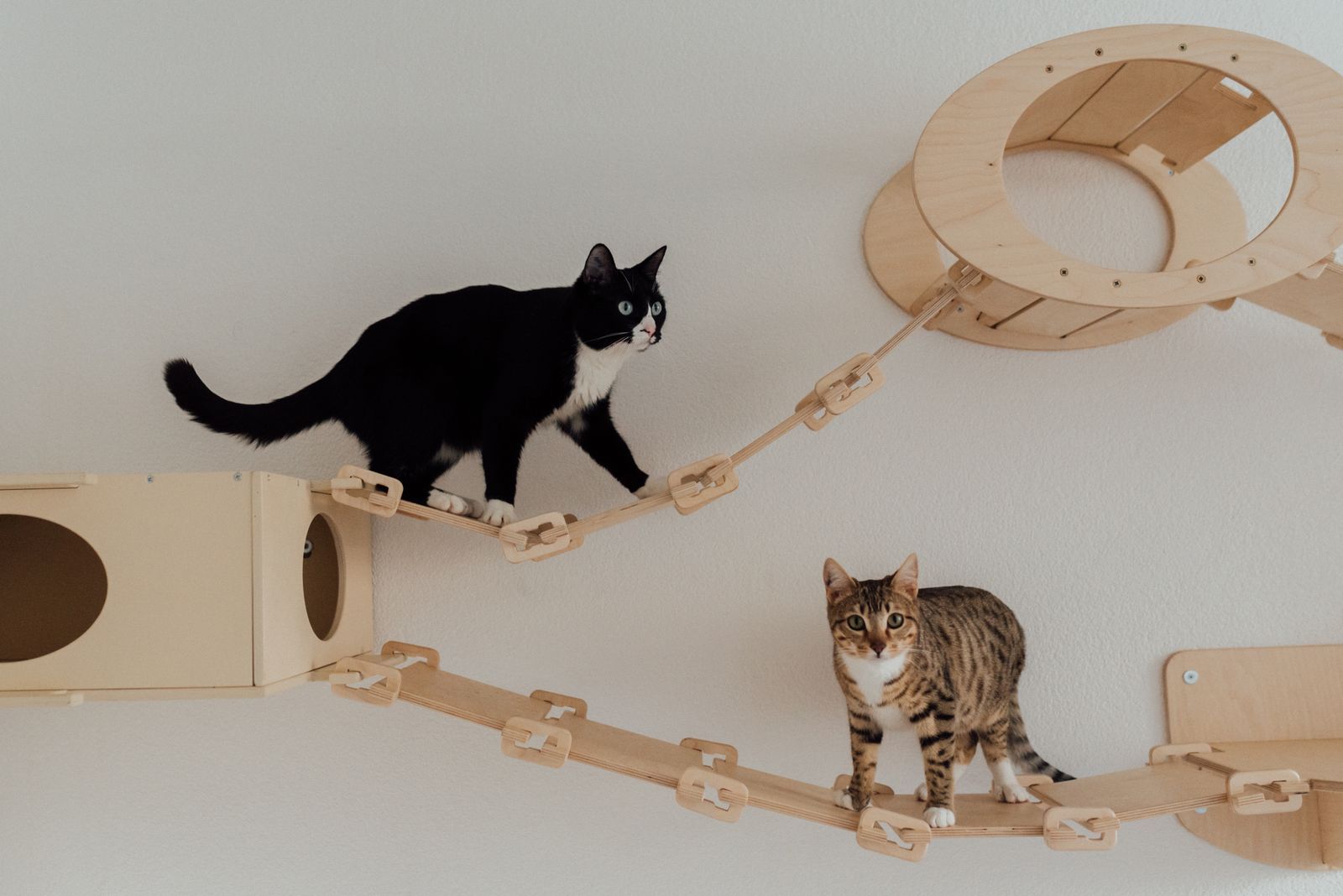
The top of the fridge. The bookshelf. The kitchen counter you just wiped. If you live with a cat, you’ve probably wondered why they’re so determined to be up there, wherever “there” happens to be.
Climbing isn’t mischief. For a cat, height means safety, information and a bit of exercise all at once. Veterinary guidelines treat elevated spaces as a core part of a healthy home for cats, not a nice-to-have. Once you understand why your cat climbs, you can give them high places you’re happy with, and gently steer them away from the ones you’re not.
The short answer
Cats like high places because:
- Height feels safe. From above, a cat can see threats coming and keep out of reach.
- It’s an information hub. A high perch lets a cat watch the whole room (and the birds outside).
- It reduces conflict. In multi-cat homes, vertical space adds territory so cats can avoid each other.
- It’s an escape hatch from dogs, toddlers, vacuum cleaners and other household chaos.
- It’s instinct and exercise. Cats are built to climb, and it keeps them fit.
To keep them off places you don’t want them, remove the reward (food, warmth, a view), make the spot temporarily unappealing, and offer a better high place right nearby.
Why do cats like to climb to high places?
Height = safety
Climbing is in a cat’s nature. Wild cats climb trees to survey their surroundings, to stalk prey and to escape predators. Domestic cats have the same toolkit: powerful hind legs that launch them several times their own height, and claws that work like climbing crampons.
The AAFP/ISFM Feline Environmental Needs Guidelines, written by a panel of feline vets and behaviorists, list “provide a safe place” as the very first pillar of a healthy cat environment. They describe a safe place as “a private and secure area, often in a raised location.” In other words, when your cat retreats to the top of the wardrobe, they’re doing exactly what a stressed or tired cat is supposed to do.
A room with a view
The same guidelines note that access to an elevated area “increases the cat’s vertical space and allows it to monitor its environment.” Cats like to know what’s going on. A high perch near a window is the feline equivalent of a balcony seat: sun, a view of the birds, and a clear line of sight to the door.
More territory, fewer fights
In a multi-cat household, every shelf, perch and cat tree adds usable territory without adding a single square foot of floor. The guidelines recommend placing key resources, including resting and perching spots, in separate locations so cats “can avoid seeing other cats, minimizing competition for resources, bullying and stress.” They also recommend having at least as many safe places as there are cats. If your cats squabble, more high places are one of the simplest fixes.
An escape route
Cats often climb to get away from something: a curious dog, a toddler who wants to “pet” them, a noisy appliance. Having an exit to a spot nobody else can reach helps a cat feel in control.
Warmth, food and fun
Some high places are just attractive for practical reasons. The top of the fridge is warm. The kitchen counter is where the food smells come from. And climbing and jumping are great exercise, especially for indoor cats.
That said, not every cat is a mountaineer. My Ragdoll prefers to stay closer to the ground. Older cats, kittens and cats with arthritis may also need lower perches or ramps to get up comfortably.
How to keep your cat off counters and other high places
You can’t (and shouldn’t) stop a cat from climbing. But you can influence where they climb. The formula is the same one that works for scratching: make the off-limits spot less rewarding, and the alternative more rewarding.
- Remove the reward. If your cat ever finds food on the counter, they’ll keep checking. Store food away, wipe crumbs, and keep the sink clear of dirty dishes.
- Make it unappealing for a while. Double-sided tape along the edge where your cat lands, or a placemat turned sticky side up, makes the surface unpleasant to land on. Once your cat stops trying, you can remove it.
- Offer a better spot nearby. Cats often jump on the counter to see what you’re doing. A stool, a shelf or a cat tree near the kitchen gives them a legal lookout point at the same height.
- Reward the right choice. When your cat uses the spot you’ve provided, offer a treat, a chin scratch or some praise.
- Don’t punish. Yelling or spraying water mostly teaches your cat to be wary of you, and stress tends to make unwanted behaviors worse, not better.
Is climbing ever dangerous?
Mostly, cats are superb climbers. But falls do happen, especially from open windows and balconies. Falls from high-rise windows are common enough that vets have a name for them: “high-rise syndrome.” A classic study of 132 cats treated in New York after falling from buildings helped put it on the map. To keep your climber safe:
- Screen your windows, or only open them from the top.
- Supervise balcony time, or use cat-proof netting.
- Check that shelves and perches are securely anchored into studs or with suitable wall anchors, and rated for your cat’s weight.
- Avoid wobbly furniture as a launch pad. A tipping bookshelf can injure a cat (and scare them off climbing for good).
Safe, stylish ways to add vertical space
Vertical space doesn’t have to mean a carpeted tower in the corner. A few ideas that work in a well-designed home:
- Floating cat shelves. Wall-mounted shelves and perches turn an empty wall into a feature and a cat highway at the same time. Look for perches wide and long enough for your cat to stretch out fully, which is what the vet guidelines recommend. See my favorite modern cat wall shelves for ideas.
- Window perches. A window seat is perfect for sunbathing and bird watching. If you have a wide windowsill you may not even need to buy one; a small shelf as a step up can be enough.
- Modern cat trees. Today’s cat trees come in clean wooden designs that look like sculpture. Pick one that’s tall enough to reach a window and sturdy enough not to wobble.
- Use your existing furniture. A bookshelf with a cleared top shelf, a sideboard or a wardrobe can become part of a climbing route, as long as it’s stable.
- Add scratching on the way up. A wall-mounted scratcher between shelves doubles as a step and a place to stretch.
Pro tips for a great cat climbing route
- Think in paths, not pieces. Connect perches, shelves and furniture so your cat can travel around the room at height. Dead ends can lead to standoffs in multi-cat homes.
- The smaller the home, the more vertical space matters. When you can’t add floor space, go up.
- Offer at least one high resting spot per cat in multi-cat households, in different parts of the home.
- Make the top spot cozy. The vet guidelines suggest a padded perch with a slight hammock-style dip, which helps a cat feel hidden as well as high.
- Keep it accessible. For seniors and kittens, add low steps or ramps.
FAQ
Why does my cat sit on top of the fridge?
It’s high, it’s warm, and it gives a perfect view of the kitchen, which is where the food appears. If you’d rather they didn’t, give them a perch at a similar height nearby and make the fridge top less inviting.
Are cats good climbers?
Yes. Cats are built for it: powerful hind legs launch them several times their own height, and their claws grip bark, rope and sisal on the way up. Most healthy adult cats climb and jump easily, which is why a stable shelf or tree is usually all they need.
Is it bad for cats to jump from high places?
Jumping down from a shelf, a cat tree or the top of the fridge is normal for a healthy adult cat. The real danger is falling from open windows and balconies: in the New York study of 132 cats with high-rise syndrome, 90% had chest injuries and 39% had broken limbs. Older cats are the other group to watch. A study of 100 cats over 12 found radiographic signs of degenerative joint disease in 90% of them, so a senior cat that hesitates before jumping down may be sore. Add a step or ramp halfway, and ask your vet.
Is it normal for a cat not to climb?
Yes. Some cats, and some breeds, simply prefer lower ground. Age, weight and joint pain can also make climbing harder. If a cat that used to climb suddenly stops, it’s worth checking with your vet, since it can be a sign of discomfort.
How many perches does my cat need?
The vet guidelines recommend at least as many safe places as there are cats in the home, in separate locations. For a single cat, two or three favorite high spots in different rooms is a great start.
Sources
- Ellis SLH, Rodan I, Carney HC, et al. AAFP and ISFM feline environmental needs guidelines. Journal of Feline Medicine and Surgery, 2013.
- Hardie EM, Roe SC, Martin FR. Radiographic evidence of degenerative joint disease in geriatric cats: 100 cases (1994-1997). Journal of the American Veterinary Medical Association, 2002.
- Whitney WO, Mehlhaff CJ. High-rise syndrome in cats. Journal of the American Veterinary Medical Association, 1987.