Cat Wall Art: 6 Modern Cat Prints and How to Hang Them
This post contains affiliate links. If you buy through them we may earn a small commission, at no extra cost to you. Learn more.
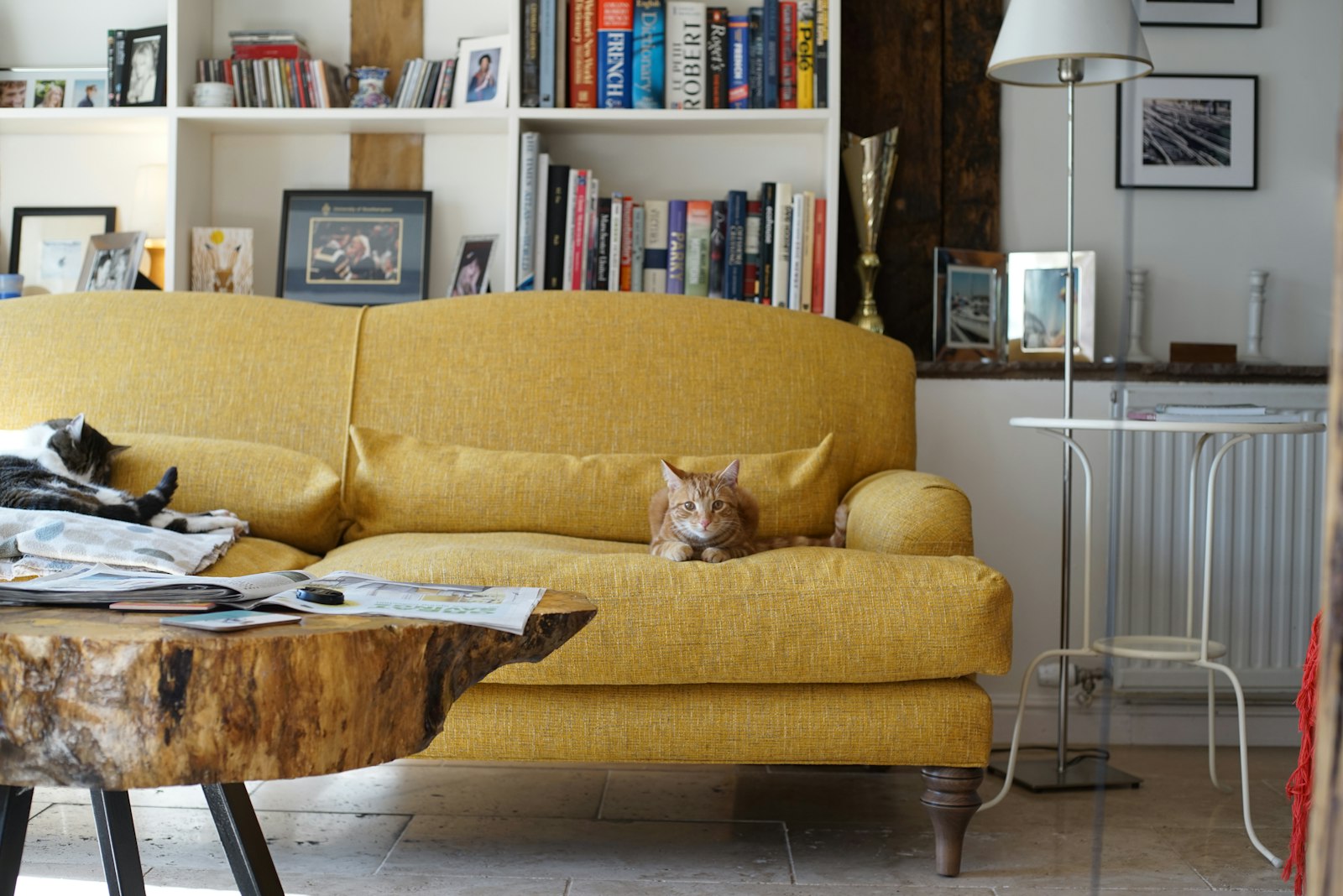
Good cat wall art says “a cat lives here” without turning your living room into a pet shop. The trick is to choose a print by the style of the room first and the cat second: a clean line drawing for a minimalist space, bold flat shapes for mid-century furniture, a vintage-style market poster for a warm, Japanese-inspired kitchen.
Below are six modern cat prints grouped by decor style, followed by how to choose a size and frame, and how to hang art in a home where a cat jumps, climbs and brushes past everything.
How I chose these: I looked through the cat prints sold by Cozy Spirit Studio, a small poster shop that prints to order in Phoenix, Arizona, and picked the designs that suit a modern interior. Every fact about paper, sizes and frames comes from the shop’s product pages, checked in October 2026. I haven’t bought these prints; the picks are based on the designs and those specs.
Cat wall art at a glance
All six prints come from the same shop, so they share the same specs: giclée printing on 200gsm matte paper, ten sizes from 5 x 7 in to 28 x 40 in, and the choice of unframed or a pine frame in white, wood, dark wood or black.
| Style | Palette | Good room for it | |
|---|---|---|---|
| Minimal Cat Line Wall Print | Minimalist, origami line drawing | Black on off-white | Bedroom, hallway, home office |
| Japanese Cat Philosophy Poster Print | Minimalist, woodcut look | Black and cream | Study, reading corner |
| Le Jazz Café Cat Piano Vintage Poster | Mid-century, retro poster | Green, orange, black | Living room, record corner |
| Minimalist Black Cat Morning Routine Print | Mid-century, flat shapes | Black, cream, red-orange | Bathroom |
| Tokyo Flower Market Cat Poster | Japanese market poster | Sage green, blue, orange | Entryway, kitchen |
| Kyoto Market Cat Print | Japanese market poster | Peach, orange, black | Kitchen, dining nook |
Minimalist cat prints
Minimalist cat art works best in black and white, with a lot of empty space around a single figure. These two hang well alone on a narrow wall or as a pair.
Minimal Cat Line Wall Print
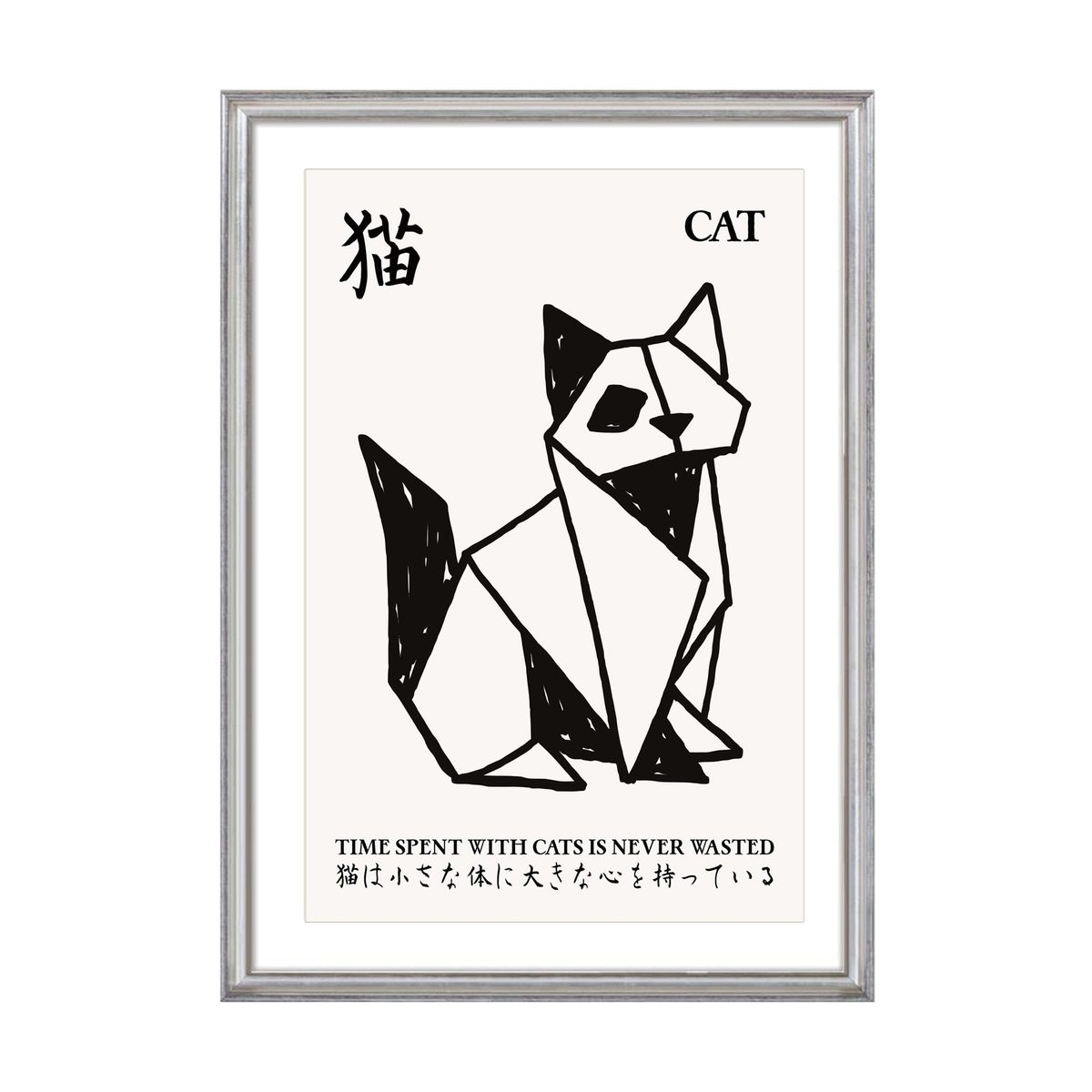
A geometric, origami-style cat drawn in black lines with a few solid patches, on an off-white background. The kanji for “cat” sits in the top corner, and a line along the bottom reads “Time spent with cats is never wasted” in English and Japanese.
- Why it works: it is the quietest print here, so it suits a bedroom or a home office where a busy poster would feel loud.
- Keep in mind: with so much white space, it looks best at 11 x 14 in or larger; at the smallest sizes the line drawing can get lost on a big wall.
Good to know: the shop sells a near-twin, the Origami Cat Japanese Poster, with the same style and a different pose and quote, if you want a matching pair.
Japanese Cat Philosophy Poster Print
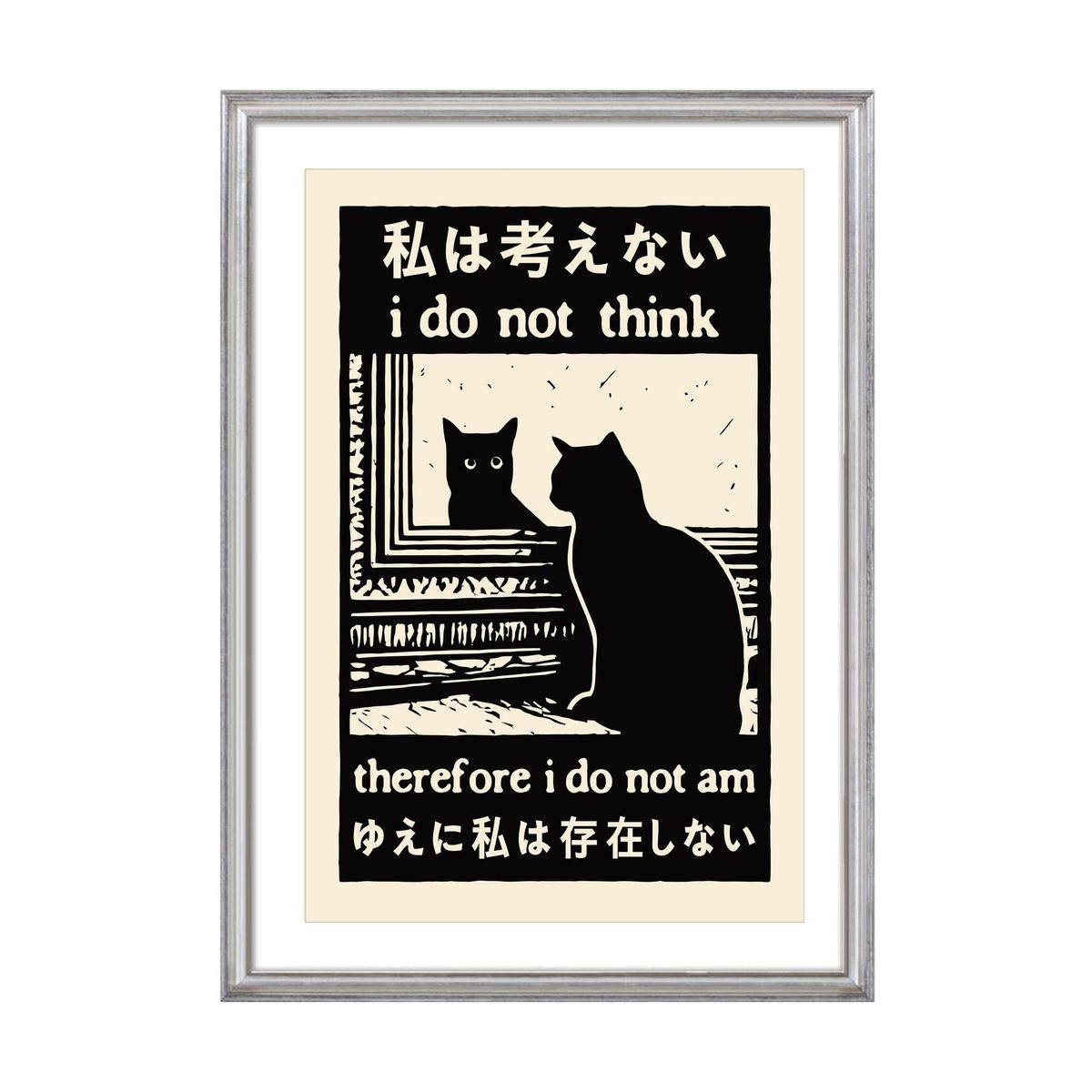
A black-and-cream print in a woodcut style: a cat sits in front of a mirror, framed by the line “i do not think, therefore i do not am” in English and Japanese.
- Why it works: it is graphic enough to hold a wall on its own, and the joke rewards a second look, which suits a study or a reading corner.
- Keep in mind: the large text blocks make it more of a statement piece than the line print above; it doesn’t disappear into the background.
Good to know: black and cream pair well with the black or dark wood frame; the white frame makes the cream background look yellower.
Mid-century modern cat posters
Mid-century cat art borrows from 1950s and 1960s posters: flat blocks of color, bold type and a stylized cat. These two bring color to a room with walnut furniture and simple shapes.
Le Jazz Café Cat Piano Vintage Poster
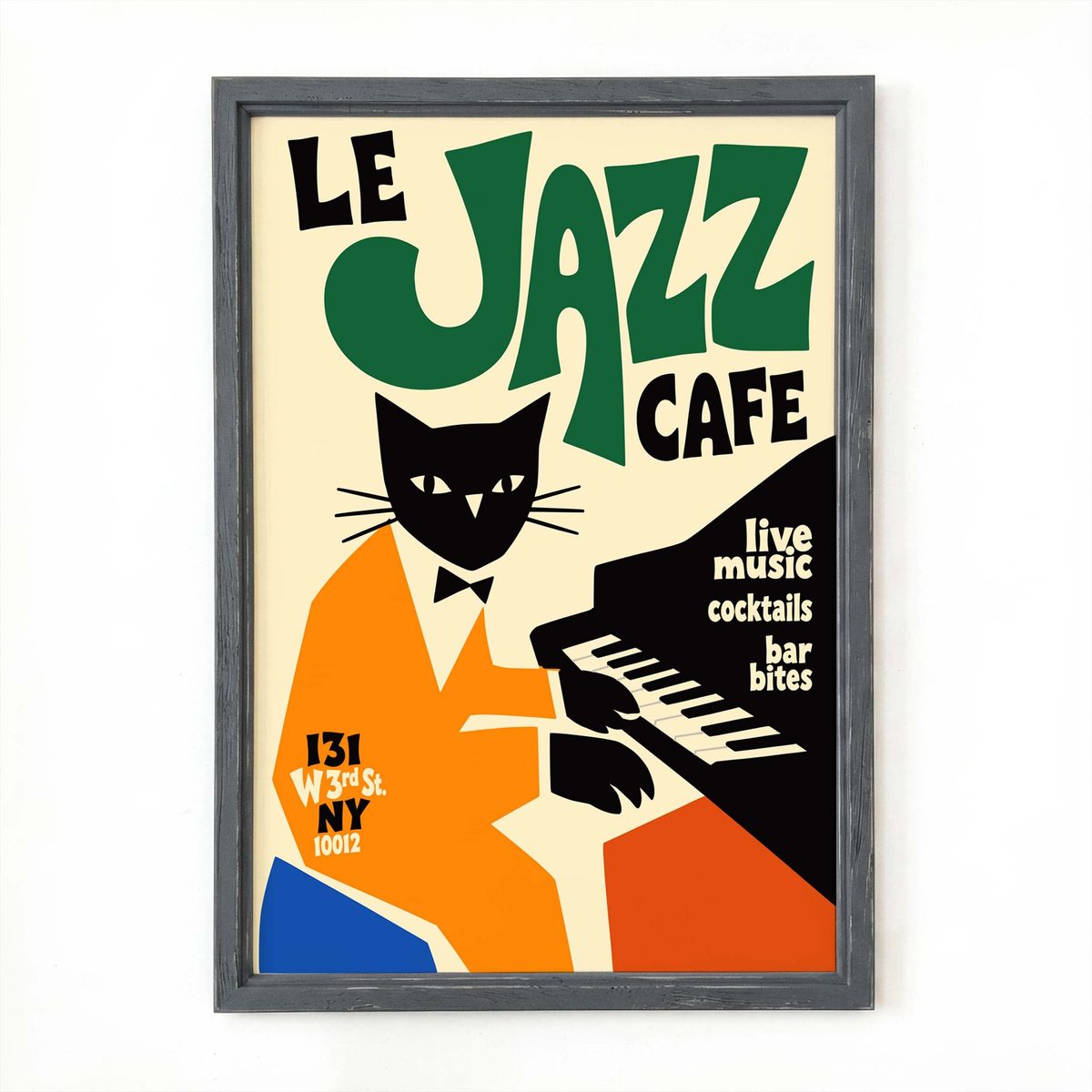
A black cat in an orange jacket plays a grand piano under big green “Le Jazz Cafe” lettering, in the style of a vintage club poster.
- Why it works: green, orange and black are classic mid-century colors, so it sits naturally above a teak sideboard or a record player.
- Keep in mind: it is the busiest design in this list, with several lines of text. Give it a wall of its own rather than squeezing it into a gallery wall.
Good to know: with this much detail, it reads best at 18 x 24 in or bigger, where it looks like a real poster rather than a small print.
Minimalist Black Cat Morning Routine Print
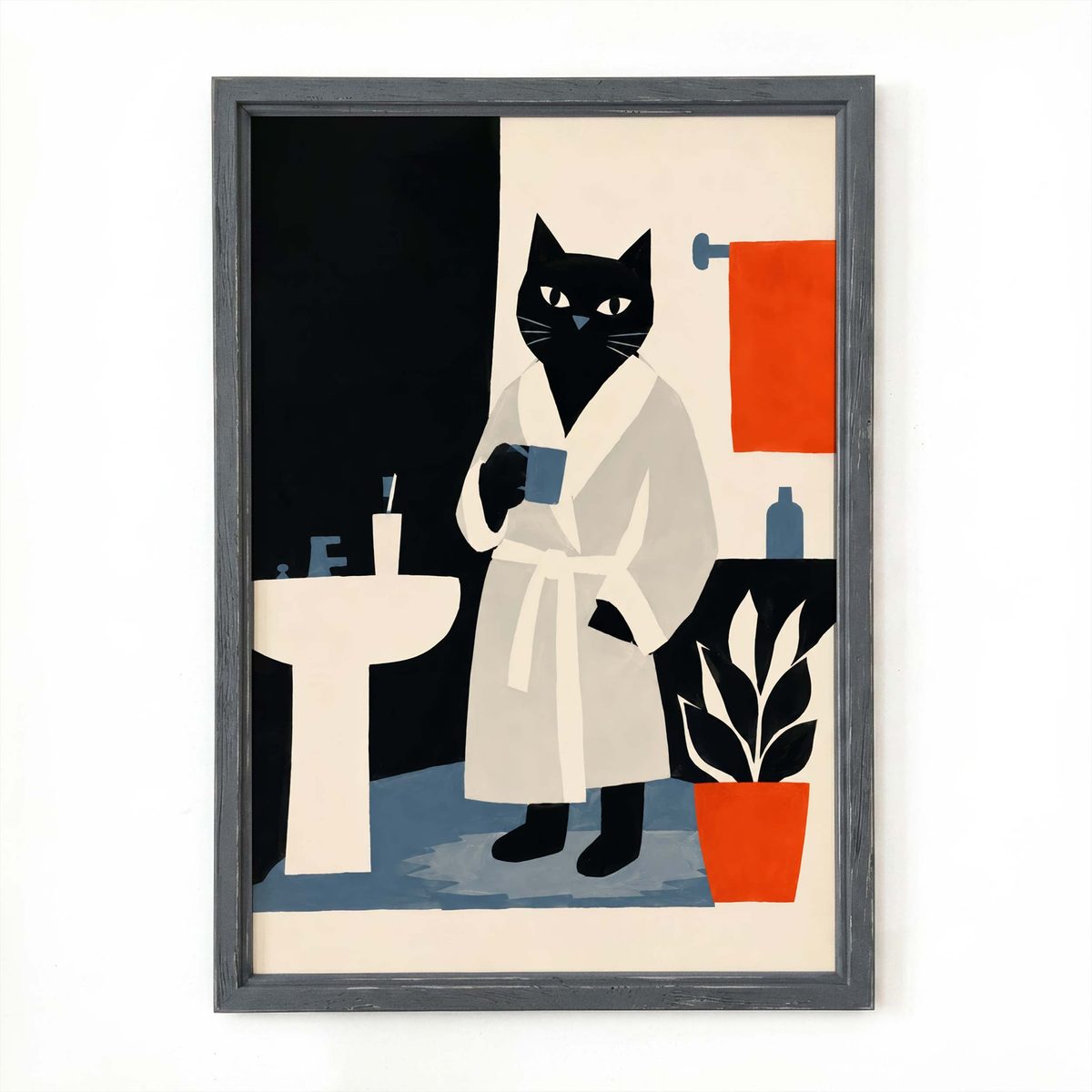
A black cat in a white bathrobe stands at a bathroom sink with a cup, next to a red-orange towel and a potted plant, drawn in flat, cut-paper shapes.
- Why it works: it is made for a bathroom, and the flat shapes and limited palette keep it stylish rather than cute.
- Keep in mind: bathrooms are humid. A framed print behind plexiglass is a safer choice there than an unframed poster.
Good to know: if the litter box lives in your bathroom, this is a cheerful way to own it. For the box itself, see my picks of modern cat litter boxes.
Japanese market cat posters
Japanese market posters mix kanji, a street address and a cat with an armful of goods. They add warmth to a kitchen or an entryway and pair well with natural wood and plants.
Tokyo Flower Market Cat Poster
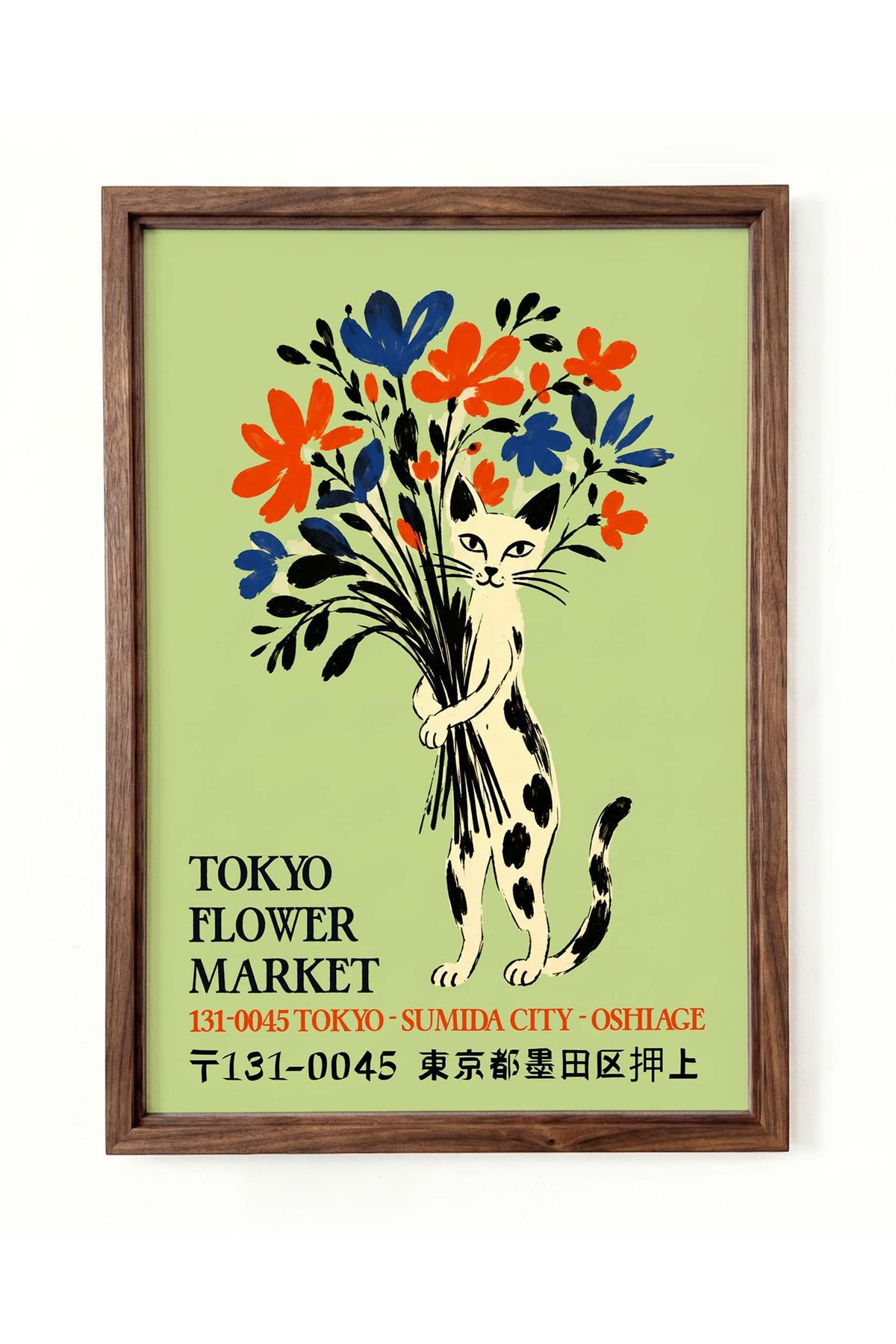
A black-and-white spotted cat stands upright holding a big bouquet of blue and orange flowers on a sage green background, with “Tokyo Flower Market” and a Japanese address underneath.
- Why it works: sage green is an easy color to live with, and the bouquet makes it feel fresh in an entryway or a kitchen.
- Keep in mind: the green is strong. Check it against your wall color; it can clash with warm beige walls.
Good to know: the dark wood frame picks up the black spots on the cat and keeps the green from looking too bright.
Kyoto Market Cat Print
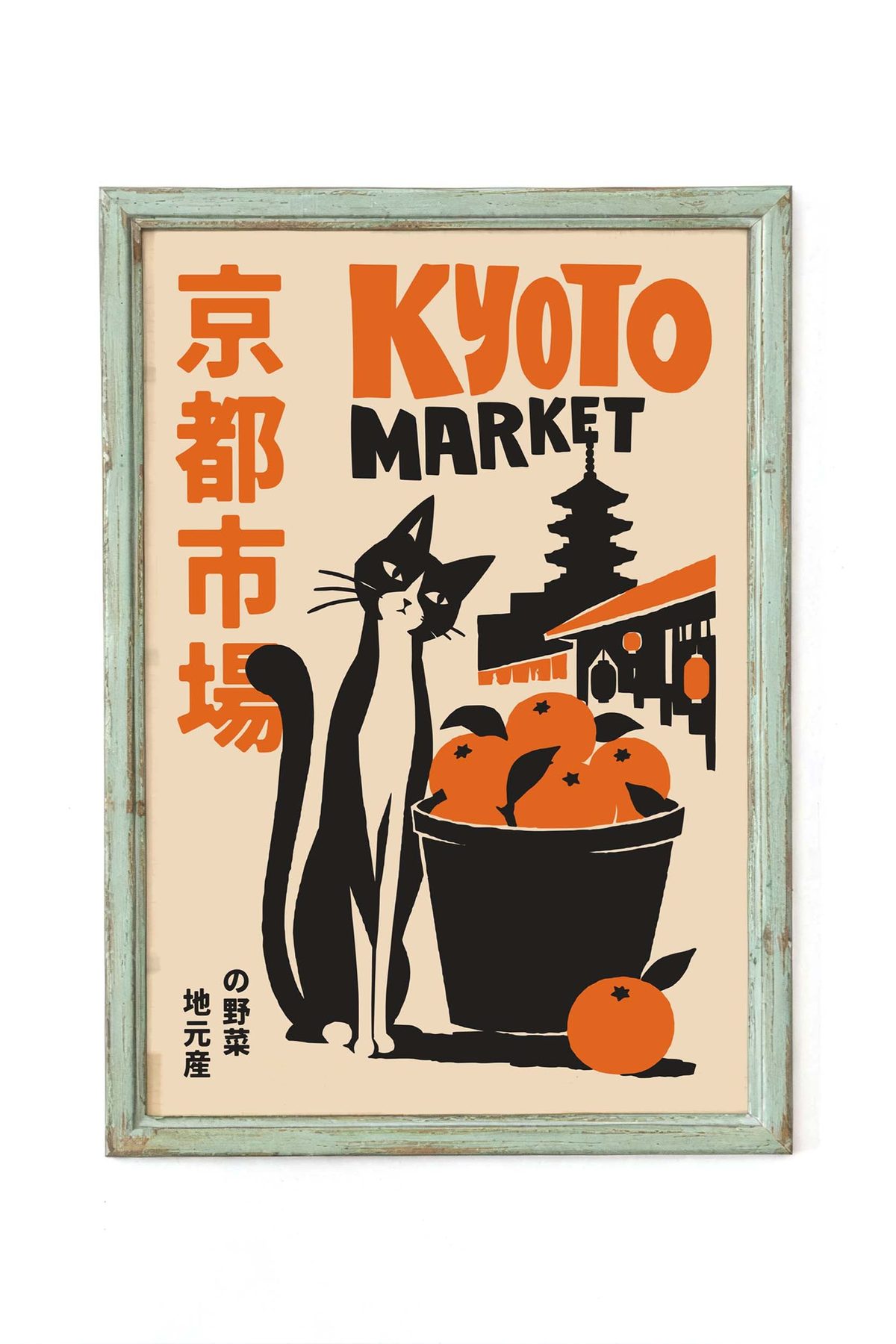
A black cat sits beside a basket of oranges, with a pagoda in the background and “Kyoto Market” in orange lettering and kanji on a peach background.
- Why it works: the warm peach and orange suit a kitchen or dining nook, and it pairs well with the Tokyo print as a set.
- Keep in mind: like the jazz poster, it is a busy design; keep the frames around it simple.
Good to know: the shop has several other market designs (Osaka fruit and vegetable markets), so you can build a gallery wall in one style.
How to choose cat wall art
Choose the size, frame and placement before you fall for a design; those decide whether a print looks right on your wall.
- Size: measure the wall and aim for art about two-thirds the width of the furniture below it. A single 5 x 7 in print disappears above a sofa; group several or go up to 18 x 24 in.
- Frame color: match a metal or wood tone already in the room. Black frames sharpen the minimalist prints; wood frames warm up the market posters.
- Unframed or framed: unframed is cheaper if you already own frames, but the shop’s own frames are sized to the print, so there is nothing to trim or mat.
- Mixing styles: keep a gallery wall to one style or one color family. Two minimalist prints next to a jazz poster reads as clutter.
- Returns: these prints are made to order and the shop doesn’t accept returns or exchanges (it replaces prints that arrive damaged), so measure twice.
How to hang art safely in a home with a cat
Cats move through a room at height, so the safest art is hung where they don’t travel and protected by something that won’t shatter.
- Keep frames off climbing routes. Cats use shelves, bookcases and the backs of sofas as paths; the AAFP/ISFM Feline Environmental Needs Guidelines treat elevated places as a core need for indoor cats, so expect your cat to use them. Leave a clear gap between a frame and any shelf, perch or cat wall shelf your cat jumps to or from.
- Choose plexiglass over glass. A frame that gets knocked down can break; glass shards are a hazard to paws. This shop’s frames use shatterproof plexiglass.
- Hang from two points. Two hooks or two D-rings stop a frame from swinging when a tail brushes it, and keep it level.
- Don’t hang art directly above a perch. A cat stretching up from a shelf or the top of a cat tree can push a frame off its hook.
- Skip leaning frames on low shelves. A frame resting on a sideboard or a picture ledge at cat height is an invitation to knock it off.
For why cats insist on being up high in the first place, see my guide on why cats like to climb.
FAQ
What kind of wall art is safe for cats?
Framed prints behind plexiglass, hung from two secure points away from shelves and perches, are the safest option. Avoid glass frames at cat height, loose hanging fabric that invites climbing, and anything leaning on a surface your cat can reach.
Where should I hang cat art?
Hang it where you will see it but your cat won’t travel: above a sofa, a bed or a desk, at eye level for a standing adult. Keep it clear of the walls you use for cat shelves and climbing routes.
Is a framed or unframed print better?
Framed is better in a home with a cat, because the frame and plexiglass protect the paper from paws, hair and humidity. Unframed only makes sense if you already have a frame that fits.
What size should cat wall art be?
Go by the wall, not the print. Above a sofa or bed, aim for art about two-thirds the width of the furniture, either one large print or a group. Small 5 x 7 in and 8 x 10 in prints work on a narrow wall, a bookshelf or in a gallery grid.
Sources
- Ellis SLH, Rodan I, Carney HC, et al. AAFP and ISFM feline environmental needs guidelines. Journal of Feline Medicine and Surgery, 2013.
- Cozy Spirit Studio product pages (paper, sizes, frames, shipping and returns), checked October 2026.